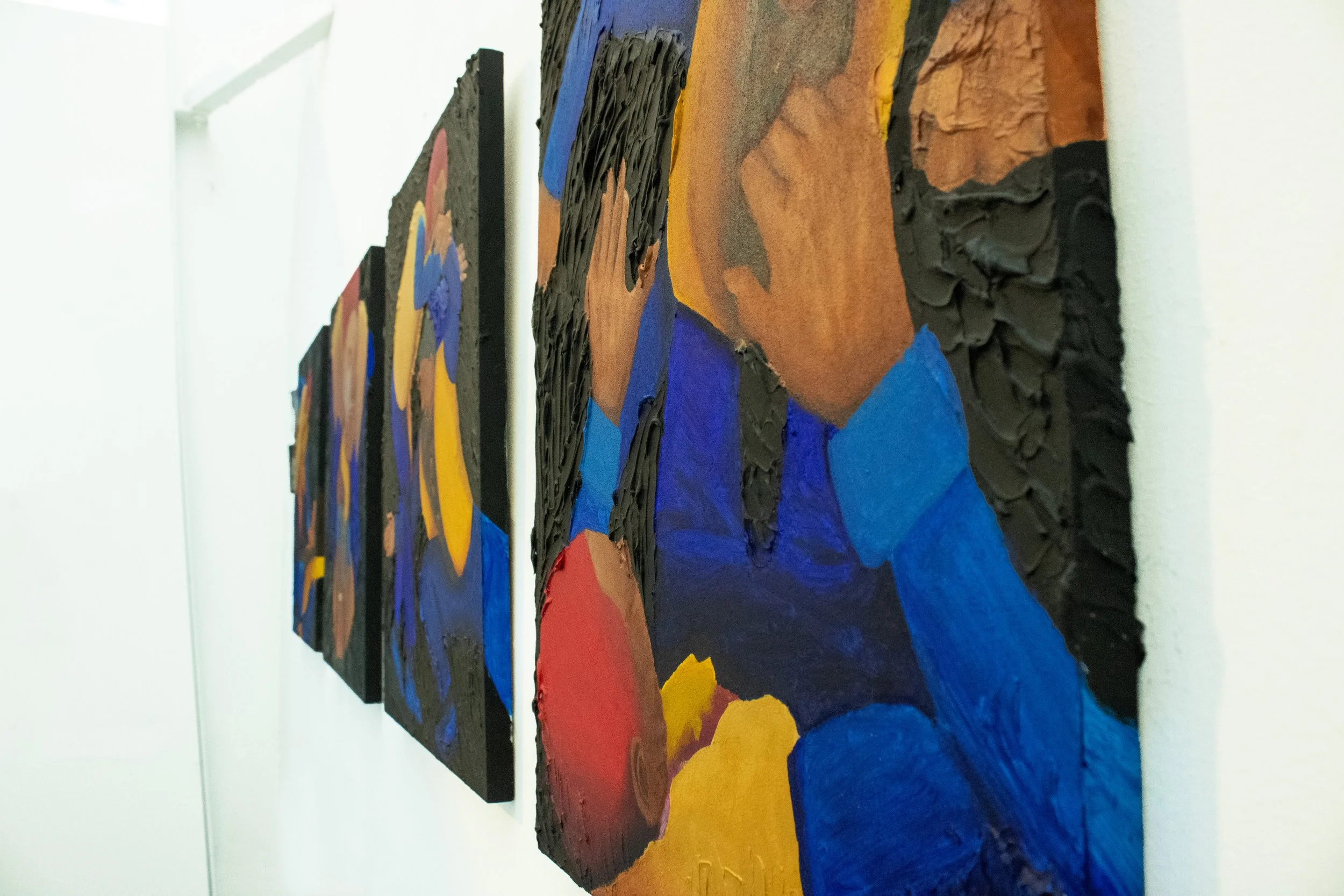
Sin Fin
A fight with no ending. The paintings examine the tension embedded within my Mexican and American cultural identities. The identities are looked through the lens of masculinity, labor and inherited social structures.
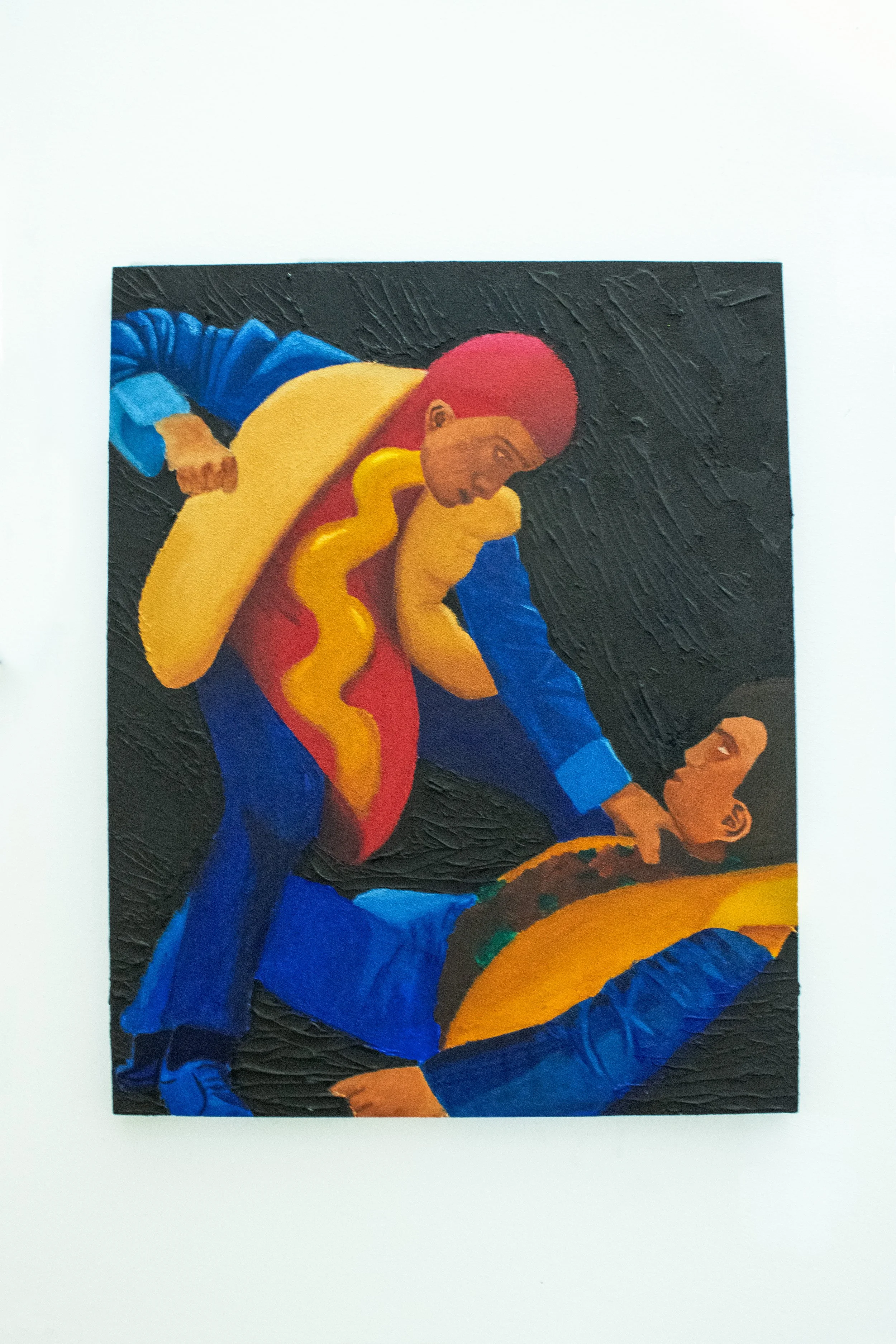
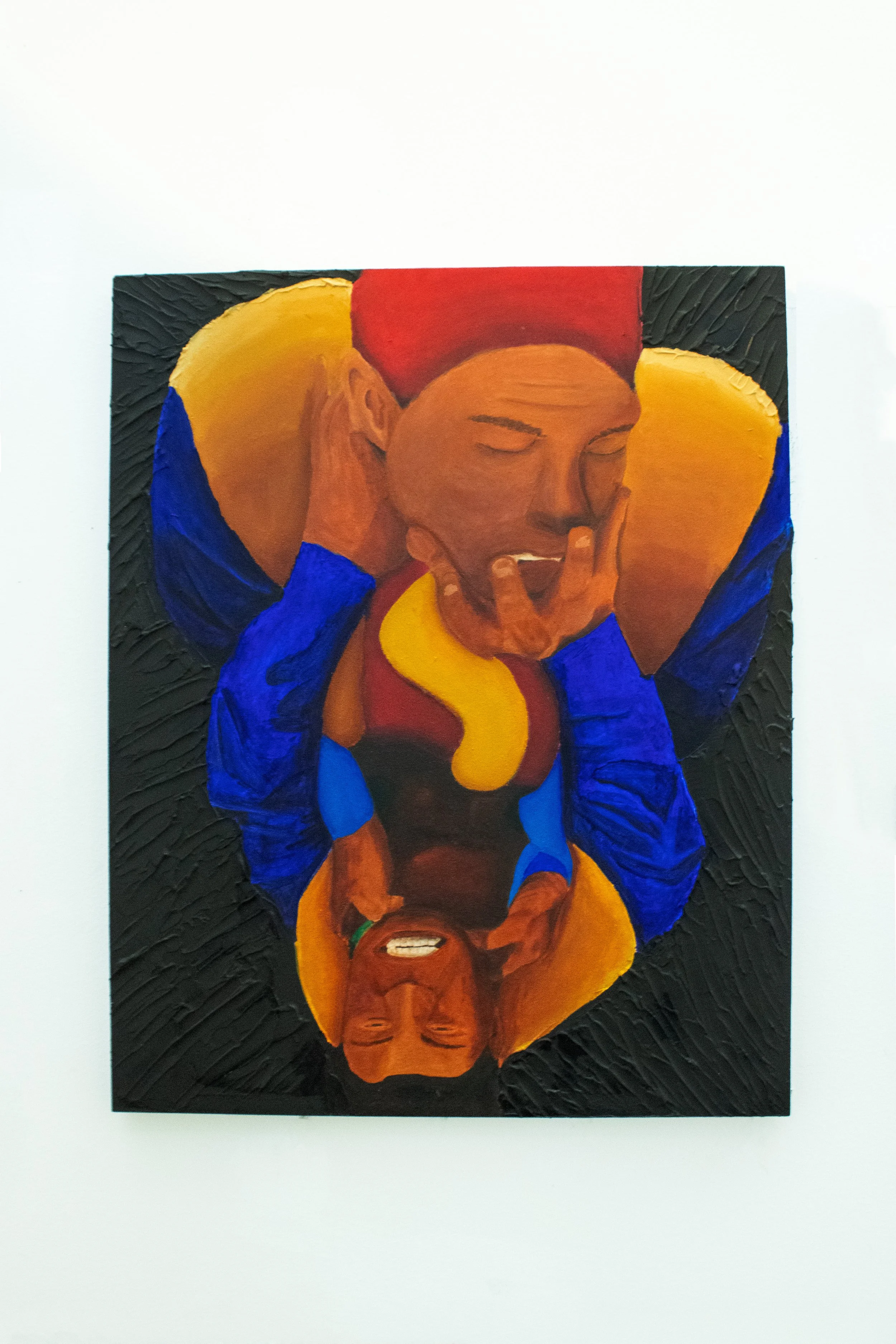
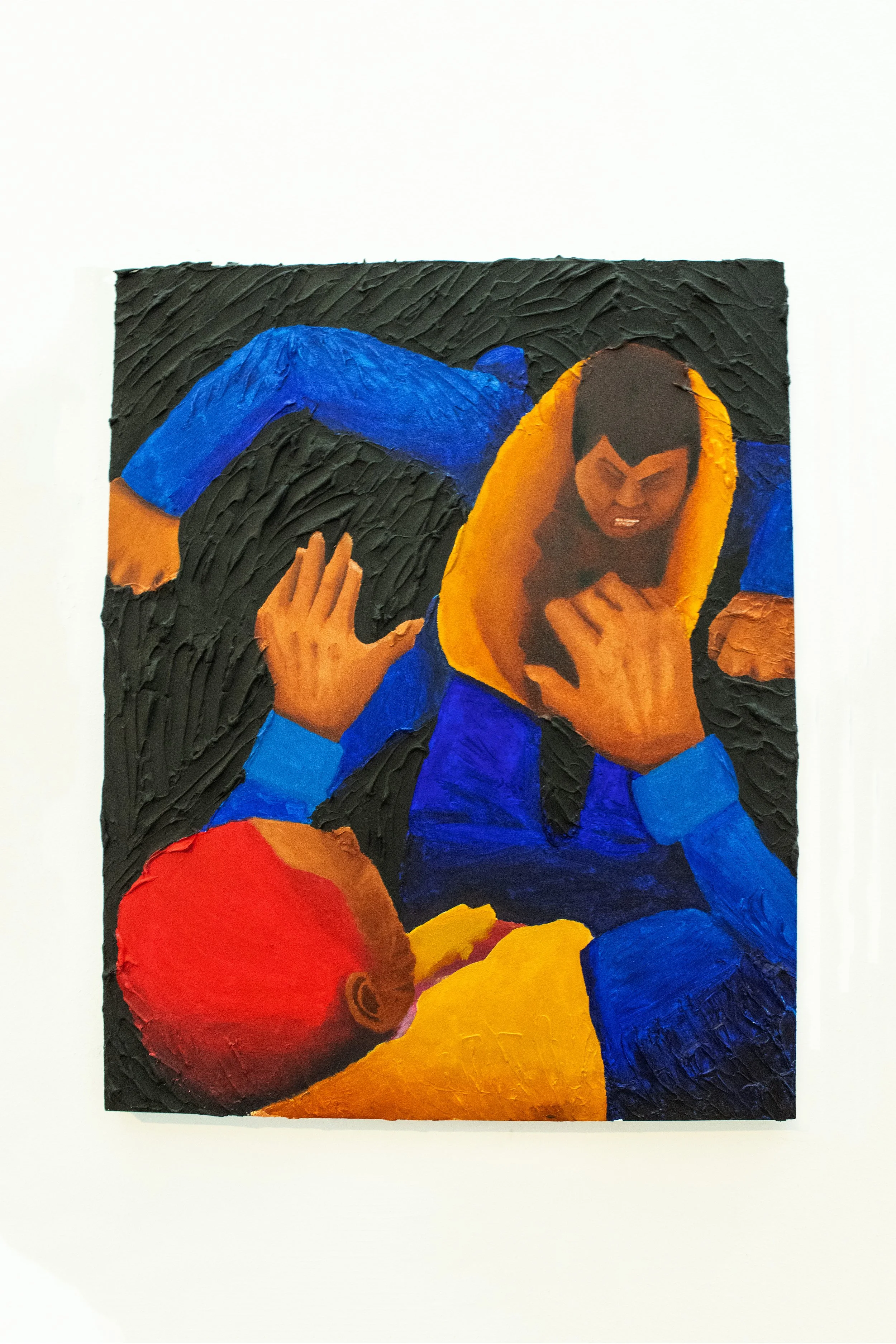
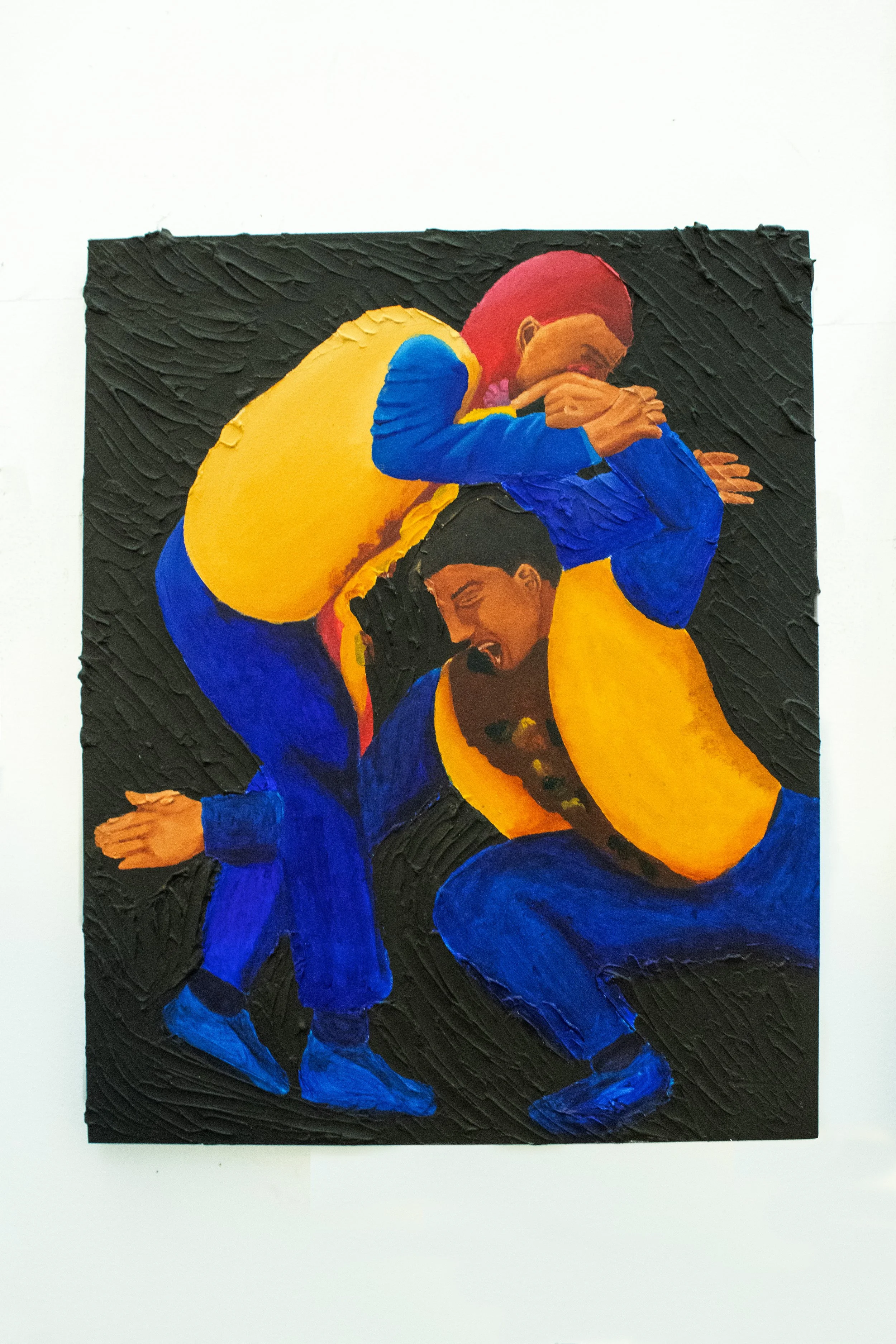
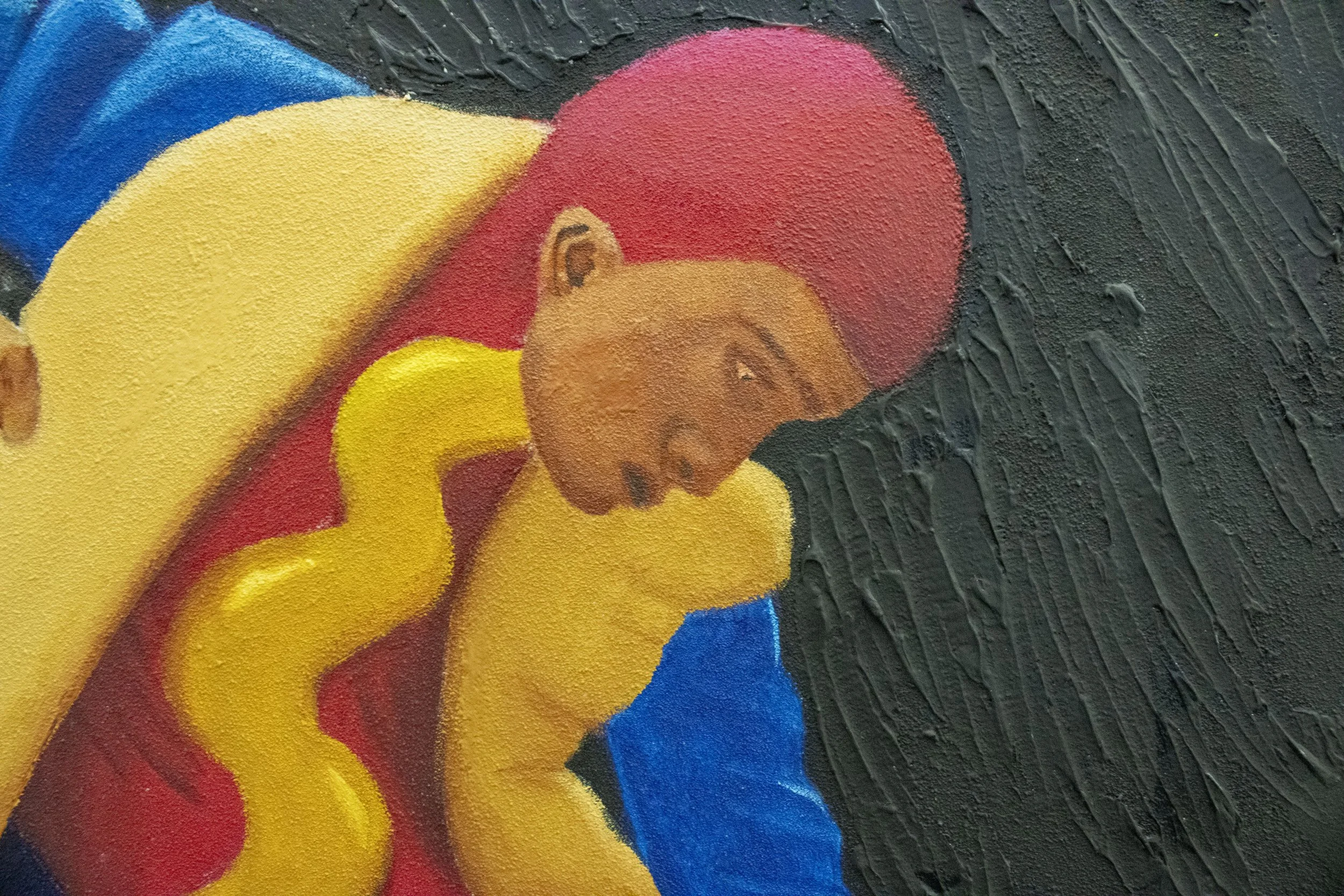
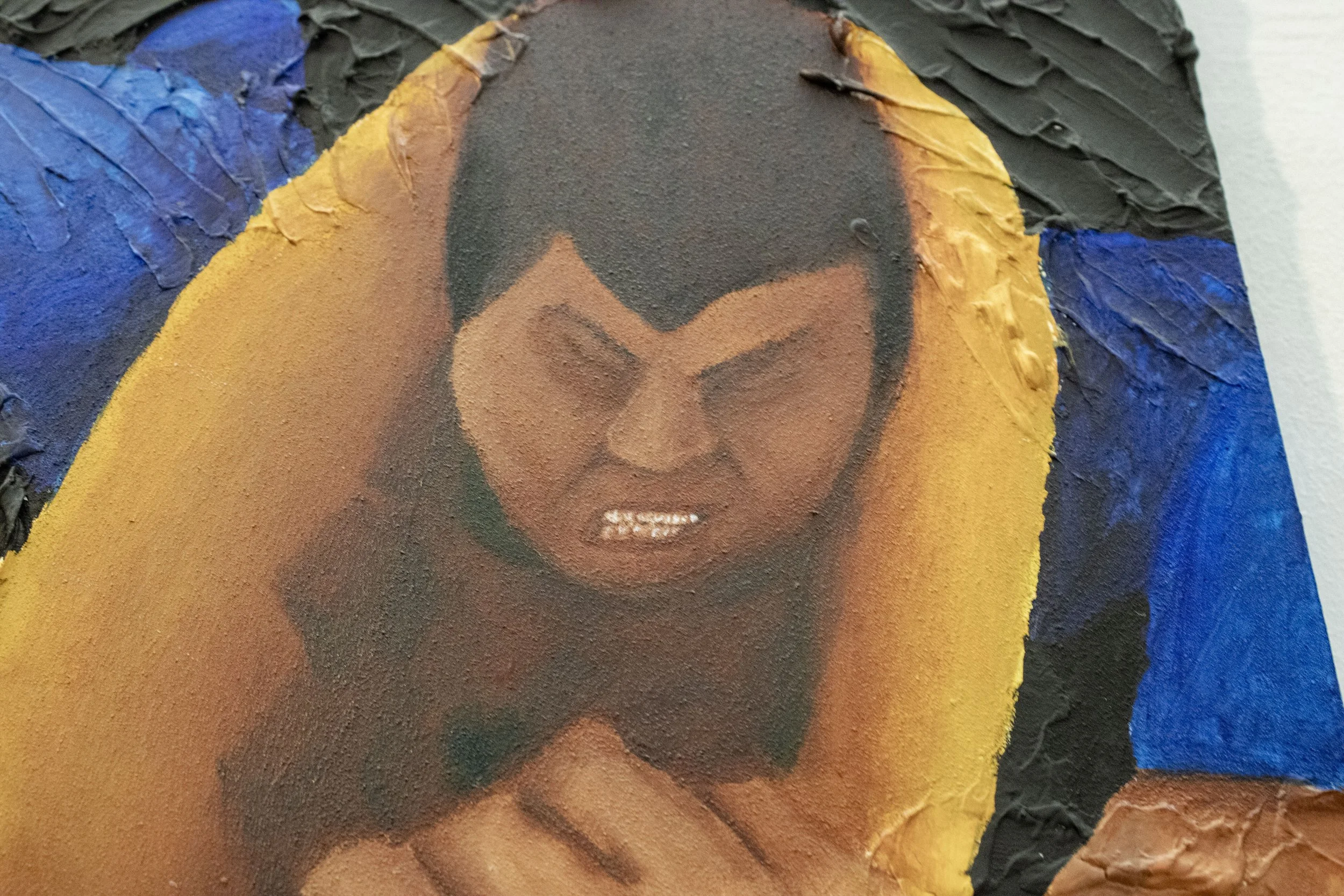
Each painting depicts two male figures engaged in an escalating physical fight. One figure wears a hotdog costume and the other a taco costume. Here the foods operate as a cultural symbol of American and Mexican identity. Beneath these exaggerated costumes, both figures wear business suits. The suits become a shared uniform referencing the expectation of productivity, labor, and social performance within both cultures. While the costumes signify cultural stereotypes, the suits reveal the underlying social structures govern those same cultures. The two male figures therefor come to represent the masculine control embedded within these social and cultural systems. As a woman, I remain positioned outside of the authority. Historically, women have had little control within these structures, and that absence of power continues to shape my own experience of identity.
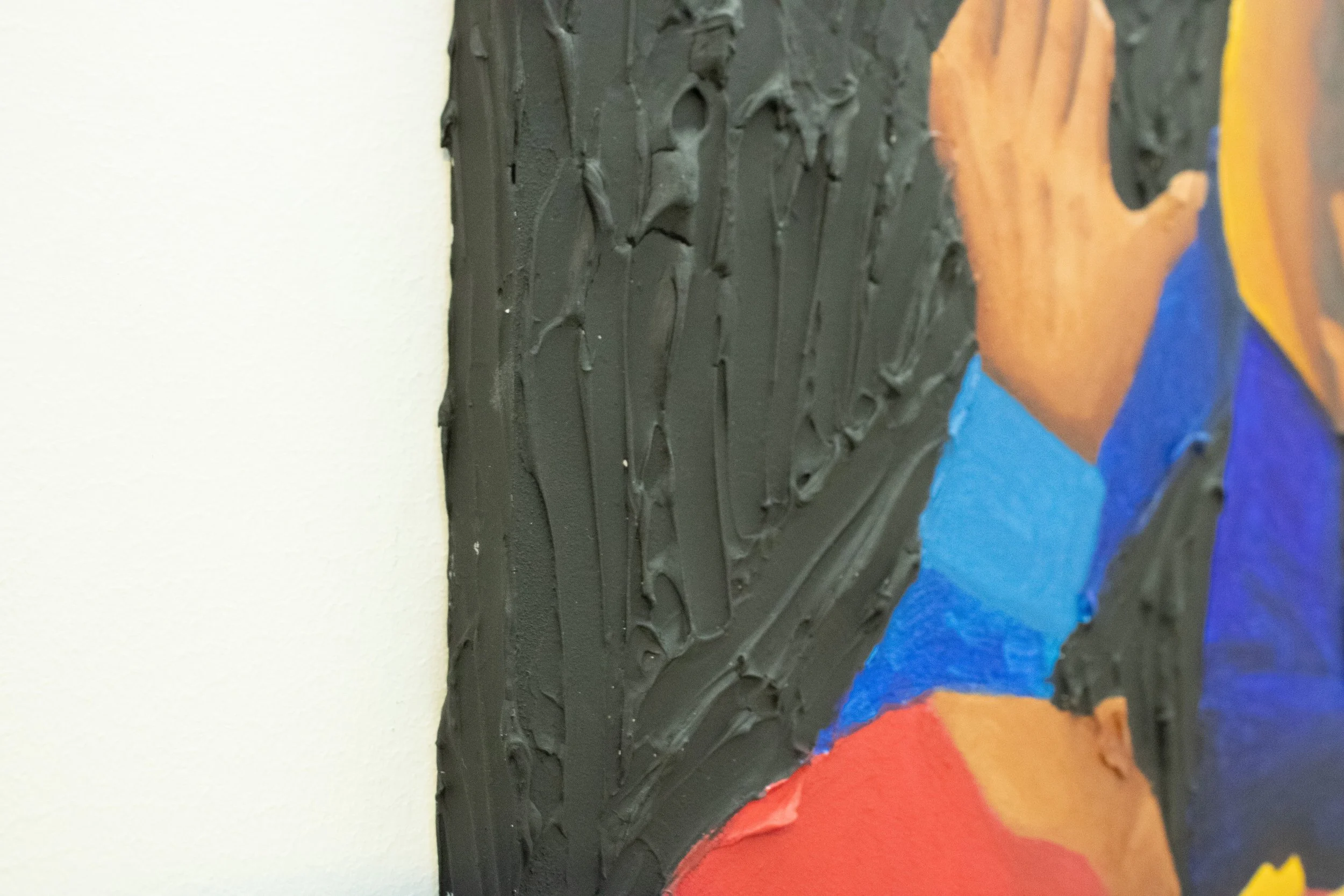
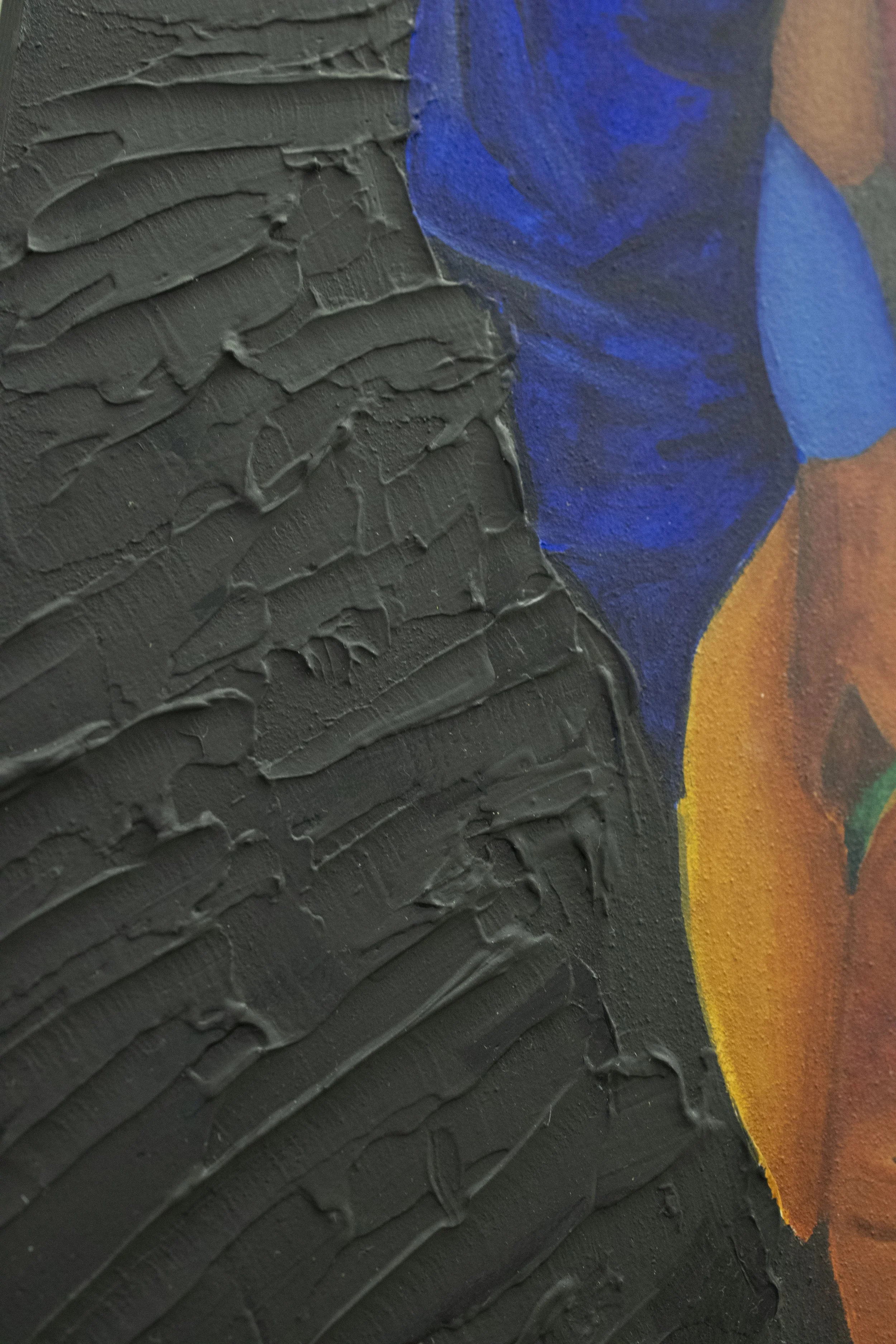
The figures themselves embody a critique to the patriarchal norms presented in both cultures. By positing these two men as the central actors in a violent confrontation, the paintings highlight the performative and often destructive nature of how these two cultures are destroying each other. As the narrative progresses across the five paintings, the conflict becomes increasingly chaotic. Hair becomes messy, bruises and blood appear, and suits become stained. Gradually, the costumes begin to resemble food more than clothing. The costumes suggest that they are no longer simply worn, but are the figures themselves. At the same time, the canvas itself begins to grown physically distressed. Marks accumulate, textures thicken and the surface adapts to the painting. This physical change mirrors the exhaustion and tension produced by the ongoing struggle, allowing the materiality of the painting to embody the toll of this conflict
Humor and absurdity operate as entry points within the work, but the imagery ultimately reveals a deeper tension. The two figures gradually become a mirror of one another, suggesting that the conflict is not simply between cultures but within themselves. Within me. By staging this endless fight, the work examines how cultural identity, masculinity, and labor are performed in an endless cycle.